
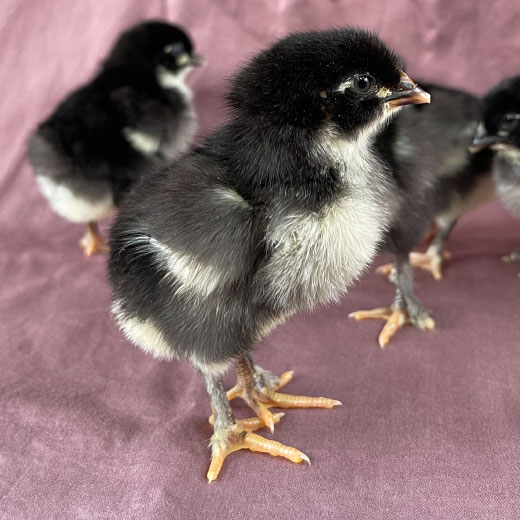
Tips for Successful Brooding & Flock Care
We are not being paid or compensated for any products linked or referenced on this page. We are not in the business of advertising, we just really, really like them!
New to Keeping Chickens?
Whether you are new to keeping chickens or it has been awhile since you have raised chicks, head to your local library and check out some of their books on keeping chickens. Find one that you like and obtain a copy to keep on hand as a reference. Harvey Ussery’s The Small-Scale Poultry Flock, Revised Edition: An All-Natural Approach to Raising and Breeding Chickens and Other Fowl for Home and Market Growers is our book of choice.
*** These tips are bits of advice that we do not see repeated often enough/things we feel are worth sharing, but they are not intended to be a crash course in chicken keeping! ***
Warmth in the Brooder
Always have your brooder ready and warm before your chicks arrive to their new home! While we think that brooder plates, which mimic the overhead warmth and protection provided by a mother hen, are an absolute game changer, we do use heat lamps for at least the first several days in the brooder (longer depending on the ambient temperature).
Always use two methods of mounting/hanging your heat lamp, so that there is a backup if one fails (e.g. clamp attached to surface of brooder and strapped to wall with wire and screw/hook).
Be especially sure that chicks have very warm water when first entering the brooder: around 98 degrees Fahrenheit. Beyond ensuring the temperature of the chicks’ water upon arrival, you should not need to use a thermometer. There a lot of information about exact temperatures for the brooder, but observing your chicks’ behavior is the best way to tell whether you need to make any adjustments: panting and stretched our means they are too hot, shivering and huddled together means they are too cold.
Water in the Brooder
No matter what solution you use for keeping bedding out of your chicks’ water, they will make a mess of it. Provide clean fresh water more often than you think is really necessary (no less than twice a day) and take the extra step to clean the waterer when doing so. The warm water is a breeding ground for bacteria. When it comes to cleanliness, remember that if something smells off to you – it is already a major problem for your chicks’ delicate respiratory system.
Feed, Grit & Forage
We choose to use organic feed not just because we do not want glyphosate ending up in our eggs, but because this allows us to produce “cleaner” compost to fertilize our vegetable crops. What you choose to feed is up to you, but if you are looking for affordable organic feed, find your locally owned feed store and ask what they stock and what they can order for you. There are other options out there besides Scratch & Peck!
We defer to using crumble with chicks and pelleted feed with adults. We have found that when using a scratch feed, there is too much selective eating, a lot of waste, and, especially with chicks, the potential for vitamin deficiency. Uniformity in every bite serves many purposes!
After just a few days in the brooder, we start mixing in a little chick grit with their crumble, and we also start providing a small supply of freshly picked herbs (mainly wild marjoram) and weeds to eat (be sure to identify and ensure the weed is safe for chickens to consume). The greens supply extra vitamins and nutrients and also begin exposing your chicks to their future outdoor home. This also encourages foraging behavior, which, when brooded by a pastured hen, chicks would already be actively engaging in.
Pasty Butt in Chicks
Opinions differ on causes, but essentially pasting up or “pasty butt” occurs when chicks get diarrhea stuck around their vent, which dries and then prevents them from being able to poop. Left unattended this can cause death. Pasty butt is common, so anyone brooding chicks should be prepared to address it. When it occurs, be sure that nothing in your brooder’s environment needs correcting and quickly address the affected chick.
Hold a warm, very wet cloth against the chick’s vent (rewetting as needed) until the dried poop is softened enough for you to gently remove it with your fingers. Once the chick’s vent is clean – apply a little hydrogen wound ointment or petroleum jelly to the vent (Gail Damerow’s The Chicken Health Handbook to thank for this tip). This helps to ensure that the next messy poop slides off of the chick, because otherwise the issue is highly likely (almost guaranteed) to reoccur. Be sure to dry the chick off as best you can and return it to the brooder. Continue to monitor the chick (who may require re-lubrication) and its brooder mates very closely until everyone appears to be pooping properly.
Biosecurity
Those unfamiliar with biosecurity take it as a red flag when chicken breeders do not allow visitors to their property, but it is a necessary practice. Pathogens can adhere to clothing, and especially shoes, and be transferred from place to place and flock to flock. Likewise, pathogens can be transported by wild birds. While it is hard to do without having “farm” and “town” clothes and shoes, take care that what you wear to the feed store, for example, is not what you wear to take care of chickens. Be careful about letting visitors interact with your flock and their environment. Do not attract wild birds to your chickens’ environment, and of special importance, do not attract waterfowl, who are highly susceptible to avian flu, to your property.
Transitional Housing – Brooder 2.0
Unless you have farm-scale facilities, your chicks will rapidly outgrow their brooder. Do not hesitate to get creative with transitional housing to ensure your chicks have enough space. As chicks grow, they are experimenting in flapping their wings and engaging in dominance behaviors to establish a pecking order. If the housing is too small, there is a greater risk of chicks injuring each other, and head injuries can be fatal. Vinyl portable dog playpens can work well as an interim housing. We like this soft pet playpen for the large size and ability to remove the bottom, which can also function as protection during monitored outdoor foraging time before chicks are ready to move to their coop.
Coops
There are a lot of really cute, very expensive, poorly designed chicken coops out there. Ventilation and protection from wind are the most important aspects of a coop, not air sealing or paint color. A larger house (think human-sized small shed), even if cobbled together with free materials, is ultimately going to work better for you and your chickens, but if you are going small, be sure to pay attention to roosting space and nesting space requirements. Do not rely on a coop being labeled “good for 20 chickens.” Check the measurements.
In addition to lacking proper ventilation, the two biggest drawbacks in most backyard chicken houses that we see are tiny pop-hole entrances that do not allow more than one chicken to leave the coop at a time and roosts that are crammed up against nest boxes. Chickens do most of their pooping at night: if they are forced to walk across that area later in the day to get to their nest boxes, it is no wonder that you will end up with dirty eggs.
If you are feeling handy or creative enough to build your own chicken house, we cannot recommend Prince T. Woods’ 1924 Fresh-Air Poultry Houses: The Classic Guide to Open-Front Chicken Coops for Healthier Poultry enough. The old-fashioned houses prioritize fresh air and light, while still providing protection from the elements. Be sure to use exterior screws instead of nails, which will allow you to replace boards or make repairs as needed. If you are not handy, but want hand-built, or just need some additional design inspiration, Best Coops & Ranch Coops has plenty of both, as does Craigslist.
If you want a mobile house that is easy to move, just add on a wheeled lift system. We like Chick Lifts‘ heavy duty metal construction and tough tires that handle our sloped terrain, not to mention that they are made in Texas. Employing a hand truck on the other end makes moving even heavy houses doable.
Whatever you decide, be sure to get started on actual construction earlier rather than later: everything takes longer than you think it will, and your chicks will grow up fast!
The Big Move Outdoors & Roosting
When to move your chickens from the brooder to outdoors will largely depend upon the weather, but they should be fully feathered, with no downy feathers left (there is of course room to bend or break this rule, but we don’t recommend that to beginners). We believe feathering occurs faster when using a brooder plate, which means that you can get your chickens outside foraging on their own sooner. Growing chicks have less insulation than fully mature chickens, and frankly, less sense. If you are putting your chicks outside early in the summer, be wary of any random rainfall – your chicks may not have the sense to seek shelter and could get soaked and chilled. Fortunately, once our summer really heats up, you are almost guaranteed not to have to worry about rain.
We use an initial grow-out house before our chickens are transferred to a larger layer house with a breeding flock. It is modeled after the D.W. Young house in Woods’ book (linked above), and allows in plenty of light and air. A day or two restricted in the house initially bonds the chicks to their new home before they are allowed the additional freedom of a pen beyond the house. Until all of the chicks begin roosting at night behind the wind-protected blind (we dispensed with the shutters), we put a blanket over the wire front at night.
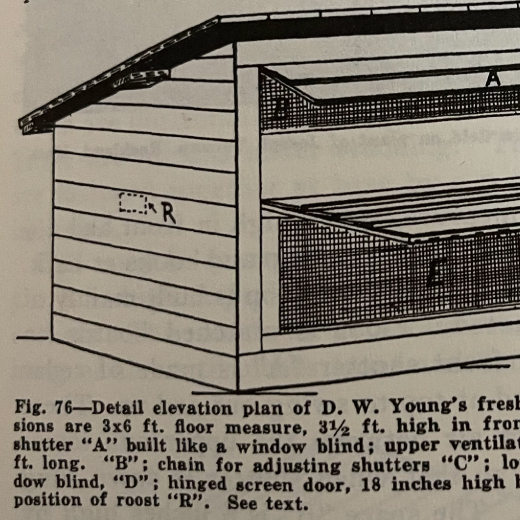
Our grow-out house is modeled after the D.W. Young house design, but dispenses with the shutters, and includes a large exit door in the back, and a hinged roof for full access.
If you allow your chicks the freedom of the run/pen without first bonding them to the house, you are likely to find them sitting in the last patch of sunlight in the run peeping in alarm as the sun goes down. To prevent having to place them in the house at night, place a flashlight or other light source in the house before it gets dark. Your chicks will instinctively seek the light and end up where you want them to be. By bonding the chicks to the house before allowing them to explore their pen, we have not found the flashlight to be necessary.
The design of the D.W. Young house includes a roost behind a blind and naturally encourages roosting at night. Typically chicks only spend a night or two sleeping on the ground before seeking the safety and comfort of the roost. The blind provides an air cushion around the roost, similar to the natural understory roosting environment of protective shrubs and small trees. Growing chicks only spend a night or two sleeping on the ground before they have taken to the roosting bar. In other house designs, it may take longer for growing chicks to learn to roost. Provided that they can see the roost, they will figure it out eventually, don’t stress about them sleeping on the ground.
If you move your chickens to a new house or location as adults, you will likely have these same experiences. Collecting the helpless chickens after dark and placing them on their new roost is sometimes easier than trying to herd them into their new, unfamiliar house at dusk – though some will happily follow a flashlight.
Electro-Net Fencing
We use Premier1 Supplies’ PoultryNet Plus fencing with double spikes for our soft winter soils to protect our chickens from coyotes, bobcats, raccoons, and the occasional loose dog that shows up on our property. Basically the threat of all ground predators is eliminated. We keep the grounding rod well-watered in the summer and check the fence charge each night. We never have to worry about our chickens when we hear coyotes at four in the morning.
In addition to keeping the grounding rod watered and checking the charge regularly, a few bits of advice: Go ahead and disconnect (cut) the lowest charged wire from feeder wire above at each end of the fence. We do this even with brand new fence rolls, because it will inevitably sag, the lowest charged wire is more likely to hit vegetation and the battery will be drained. This lower wire serves more to contain chickens than protect them because predators are likely going to be shocked at nose height further up on the fence versus first trying to go under the fence (we don’t have problems with weasels, which might warrant a different approach). You can also invest in Premier 1’s Sagstopper posts, but disconnecting the lowest wire will prevent a lot of problems. After cutting the charged wire (look for the metal wire), be sure to weave the cut ends back into the other wires so that your cut ends don’t dangle onto the lower line and drain your battery. We cut the whole thread, as shown below, but you could cut the metal wire only.
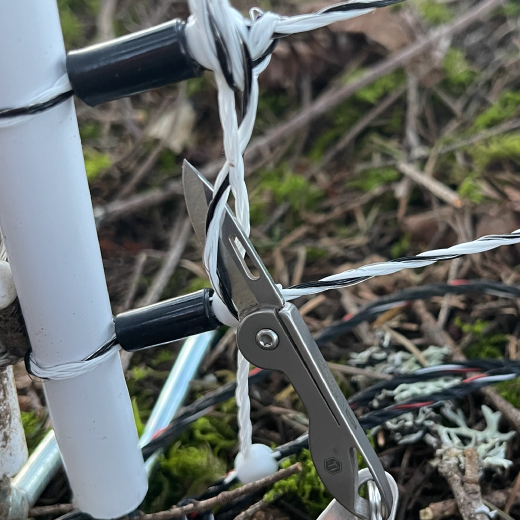

If your battery has drained and you cannot find the reason and you have not disconnected the lowest charged wire, check the bottom of your fence: it is easy for the first charged wire to slip down onto the metal spike: this will rapidly drain your battery. This is most likely to occur at the ends of the fence, so check there first.
We shake snow off our fence to avoid weight build-up, and we do shovel around it in an abundance of caution, but in reality a few inches of snow is not going to stop your fence from working normally (especially if the bottom wire isn’t charged). More than that, and, yes, you will need to do some shoveling for sure.
We like the SolarStop 80 as an energizer because the green “it’s working” light is quite large (much larger than the IntelliShock30), and we can see it from inside our house. It also uses a grounding rod versus being mounted to grounding spikes, so turning the energizer to follow the sun on dark winter days and turning the light to face the house at night is easy (you could always use a grounding rod with the others as well). When the winter gets particularly dark for many days in a row, we do sometimes run into issues with batteries not being well-charged from the solar panel and have to recharge it at an outlet, but we still feel it is a rather flawless system (Now that we have multiple chargers, we have switched to keeping back up batteries charged with a trickle charger. We note that batteries were a full 30% cheaper from Premier than buying through Interstate!). We have observed coyotes, just twenty feet from our chickens on the outside of the fence, hunting voles as if the chickens did not exist. Once a coyote has been shocked, they are unlikely to test the fence again – your neighbor’s dog might be another story.
Although we have some chickens who can fly over a four foot fence when they want to, they avoid touching the white electro-netting and most never attempt to fly over it. Do be careful to observe chickens when they are first introduced to electro-netting in case you need to intervene. Especially when small, there is a danger that they could be caught in the netting while trying to go through it and receive too many shocks. We always use additional 2 in plastic fencing inside the electric fence to contain young chickens. Typically mature chickens receive one small shock, and manage to stay clear of the fence going forward.
Roosters
If you are able to keep a rooster, we highly recommend doing so. A rooster will keep an eye out for predators, ensure your hens get in the coop at dusk and don’t leave too early in the morning, and a really good rooster will tell hens of good foraging opportunities and comfort them while they are laying eggs. Hens are happier with a manservant around – provided he’s good at his job.
You can keep more than one rooster in a flock, and we often see people ask how many hens are necessary to keep two roosters. We find it has more to do with the roosters’ personalities than a certain number of hens. If two roosters are able to get along with each other, the most likely other problem will be that hens are forced to endure successive mating from each male, and the dominant roosters’ favorite hen will inevitably receive too much attention. Some pairs of roosters do this, others don’t. Swedish Flower Hen roosters seem less concerned about this (more likely to be dominant over food than hens). Peaceful dynamics can also change. If the dominant rooster gets hurt, the other rooster may try to take his spot, which can initiate battling in a pair of roosters that were otherwise fine with each other. There is also the sad circumstance of a rooster who has been dethroned and will become depressed. All that said, yes, it can be done, but be prepared to separate, or even rehome or process your least favorite rooster if necessary.
If you are keeping a Pita Pinta rooster, you will not have to worry about aggression towards you—they are simply delightful. If you do have a rooster showing signs of aggression, standing still should be your go to response. This teaches the rooster that you are not a physical threat. Avoid wearing red. Hold a feed bucket between you and the rooster if he is getting particularly physical. Observe what sets your rooster off. We have a Swedish Flower Hen rooster who will follow you like a shadow and gets aggravated if you walk faster than him. As long as he can keep pace with you he is fine – all he really wants is whatever food you are bringing to the flock. Consistently offering treats upon your arrival can help change a rooster’s mind about you. If a rooster becomes consistently aggressive, he should be processed.
If you have the space and the desire, you can keep a flock of roosters together out of sight of any hens. We introduce new roosters to our bachelor flock with a temporary fence separating them for most of a day—throwing desirable treats on either side. Later, we allow the group to mix, but monitor for any issues. Shockingly little fighting occurs. This allows us to grow out many males and select the best candidates for breeding, as well as keep backups around.
If you can’t keep roosters and aren’t interested in processing meat for your own family (which we highly encourage!), chances are there is someone nearby who is happy to finish growing him out and humanely process him for their own dining table. If you haven’t processed before but would like to, take a processing class! You can also take the rooster to a processor, and bring him home to cook. At large hatcheries, day-old male chicks are ground alive or die in other horrific ways. Processing is truly the most humane outcome and respects the life of the rooster – giving them purpose rather than treating them as a waste product. Currently, we do not have a setup that would allow us to maintain biosecurity and have roosters come back to our farm to be processed, though it is something that we would like to offer in the future.
All About Egg Colors
 Perennial Hill, LLC