

Swedish Flower Hen
**** In 2026, we do not have a purebred Swedish Flower Hen breeding pen, and are instead using our Flower Hens in our Rising Mist Breeding Project. Our Elk Creek Rock Breeding Project also has Swedish Flower Hen genetics. If you are interested in purebred Swedish Flower Hen chicks for local pickup, you can still reach out to us on our Contact Page to let us know, and we will keep you in mind for future breeding plans/late summer small hatches. ****
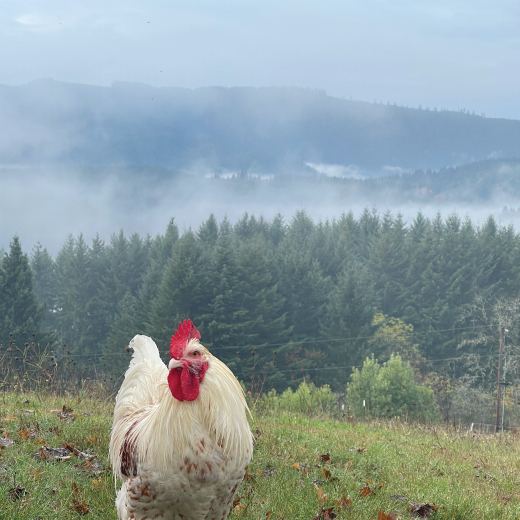
Commonly known in the United States as the Swedish Flower Hen, the Skånsk blommehöna (Scanian Flower Hen), is one of many Swedish landrace breeds believed to trace their origins back to the first domesticated chickens arriving in Sweden over 2000 years ago. As a landrace breed, their qualities developed through natural selection rather than human intervention. Consequently, Swedish Flower Hens are avid foragers and a good choice for the Pacific Northwest climate.
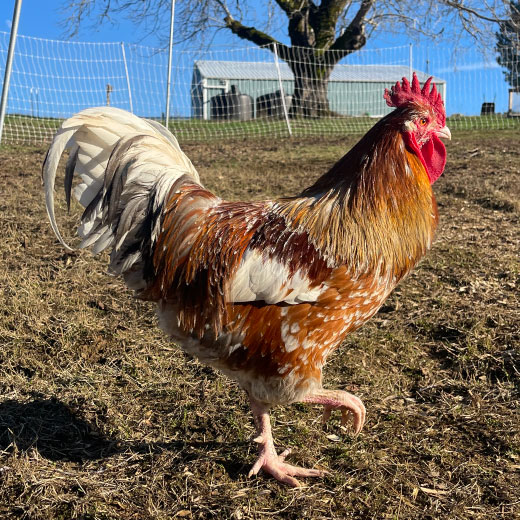
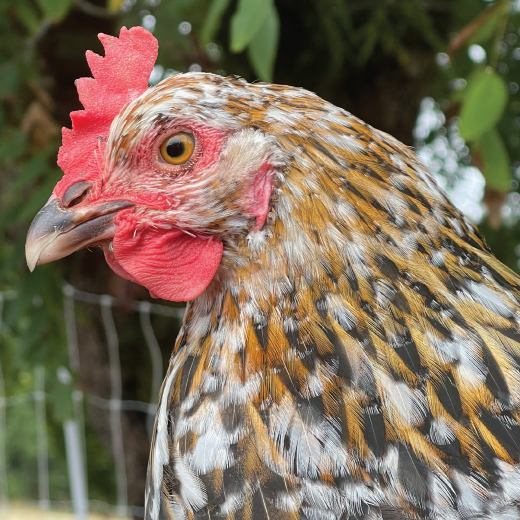
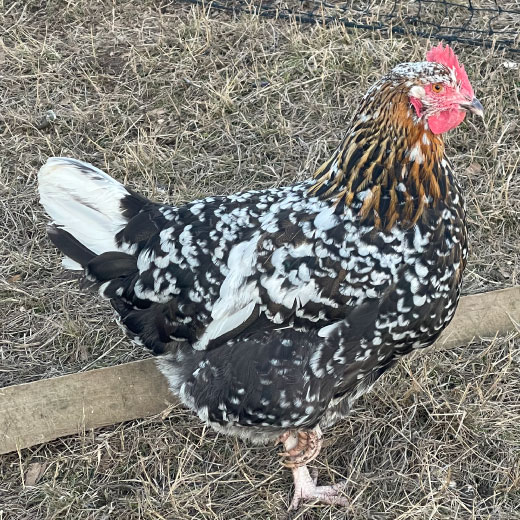
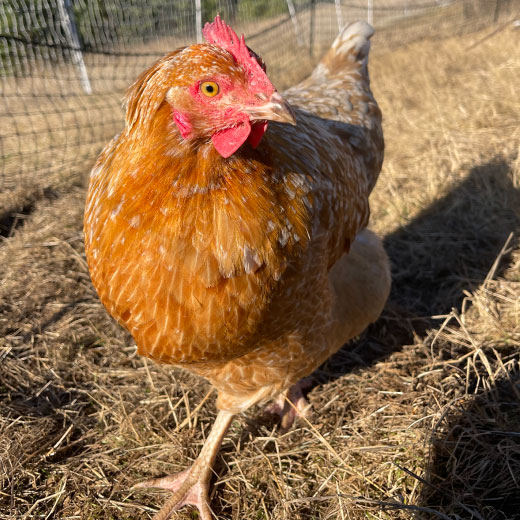
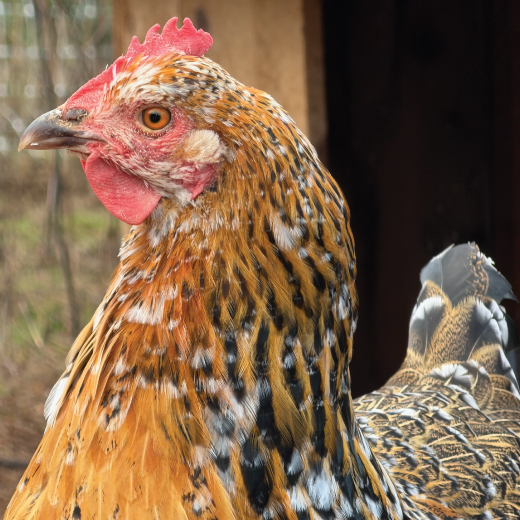
Swedish Flower Hens have a mottled (white tipped) feather pattern and the base color can be black, blue, wild (red-orange roosters and brown hens), or light yellowish (wheat color). Their feather patterns are truly breathtaking, often likened to the delicate beauty of wildflowers. No two birds will be exactly alike, as the mottling gene is qualitative and may be more or less expressed. Mottling expression may also increase or decrease during molts. Some Swedish Flower Hens have tufts or cresting on their heads, which we have not seen in our flock.
We have hens in each of the four colors in our flock, with the most variation seen in the wheat shades (whether paired with blue or black). In 2025, we had one white hen with gray lacing on her neck hatch in our grow outs.
Swedish Flower Hens are not known for being broody, however, most of our hens started sitting in 2025. They are not, however, very good mothers, continuing to sit after hatch. So if you let your hens be broody, be sure that you are prepared to brood the chicks yourself and have ready access to extra to chicks to keep your inevitably lonely chick company!
Swedish Flower Hens are good layers at 150-200 tan eggs per year, but note that they start out laying smaller (sometimes tiny!) eggs that gradually increase in size. In our experience our hens have started laying the occasional extra large or larger egg in their second season of laying. We have also observed this in Swedish Flower Hen crosses and mixes. Most of our hens lay tan or tinted eggs, but our black hens seem to lay a barely tinted egg. Occasionally we see heavy bloom or white speckling.








Breed Resources:
Our Other Breeds & Breeding Projects
Elk Creek Rock Breeding Project
 Perennial Hill, LLC